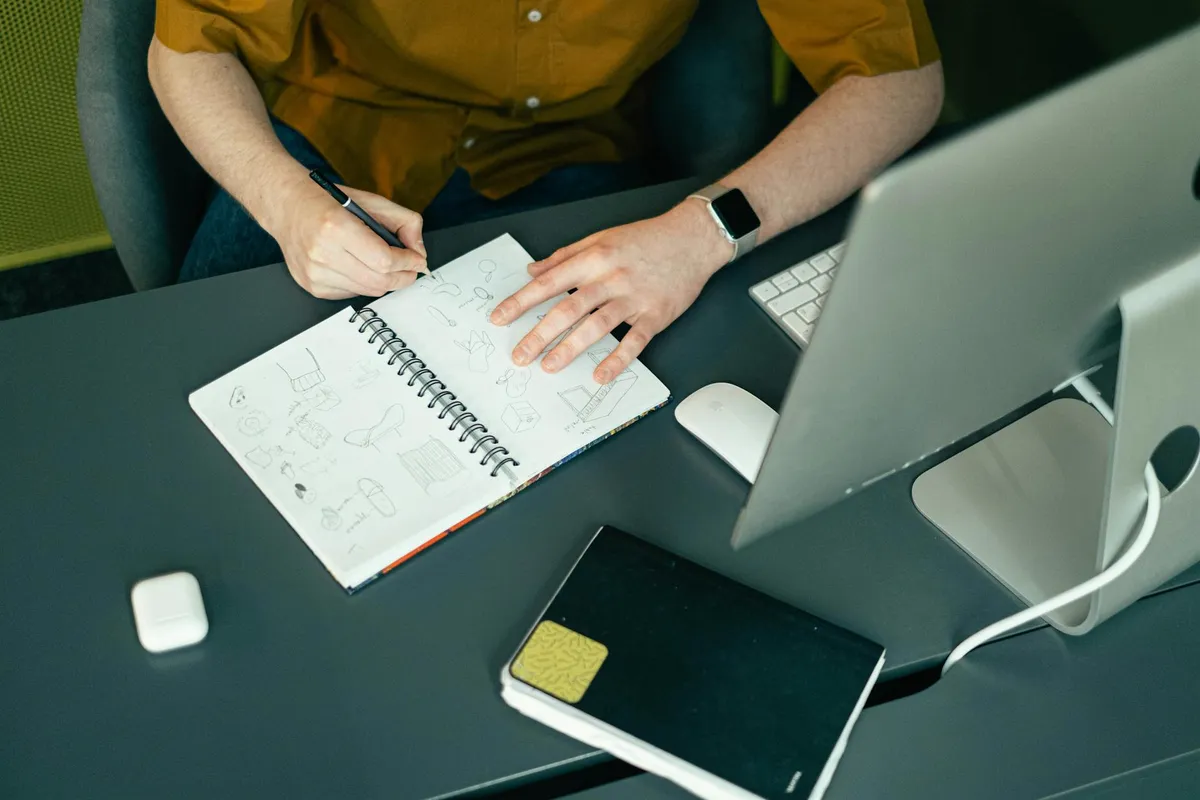
I committed to completing 50 illustration projects in a year as a deliberate discipline experiment. Mix of client work and personal projects, but with the volume target driving the pace. The year is finished; the work is done; the lessons were not what I expected. Here's what I learned, with what I wish I'd known at the start.
The setup
The plan: roughly one illustration project per week across a year, allowing for some clustering and some gaps. Mix of client commissions, personal experiments, and series work. Track time spent, techniques used, and qualitative results.
The expectation: my technical skills would improve dramatically from the volume. My efficiency would increase. My style would solidify.
The reality: some of these expectations played out. Others were wrong in interesting ways.
What worked as expected
1. Technical proficiency improved
The volume produced clear skill gains in the technical fundamentals — line work, color application, composition basics. The improvements were visible in the work and confirmed by feedback from other illustrators I trust.
This was the obvious expectation. Volume of practice produces skill development. The relationship is well-documented; my experience confirmed it.
2. Speed increased
The illustrations I made in month 11 took roughly 60% of the time the equivalent illustrations in month 1 took. The speed improvement came from technical proficiency plus better workflow plus less hesitation about decisions.
Also expected. Practice produces efficiency.
What didn't go as expected
3. Style consolidation didn't happen the way I'd imagined
I'd expected that the volume would produce a recognizable consistent style. What actually happened: I developed multiple styles for different contexts, with the boundaries between them becoming more deliberate. The work in month 12 was more varied than the work in month 1, not less.
The deliberate variation turned out to be more useful than narrow consistency. Different client work needs different visual approaches; having multiple styles available expanded my range without diluting any individual style.
4. The breakthroughs came at unexpected points
I'd expected gradual linear improvement. The actual pattern: long stretches of slow improvement punctuated by sudden breakthroughs that came after specific projects. The breakthroughs were not predictable; they followed projects that pushed me into discomfort.
The lesson: deliberate practice in uncomfortable territory produces more growth than comfortable repetition. The projects I avoided because they intimidated me turned out to be the highest-value projects.
5. Client work taught more than personal projects
I'd expected personal projects to be where I learned most — freedom to experiment, no client pressure. The reverse turned out to be true. Client work, with its constraints and feedback loops, drove more growth than personal projects with their unbounded freedom.
The constraints turned out to be the teaching mechanism. Real briefs with real audiences produced better lessons than self-directed exploration.
6. Volume produced burnout that I didn't see coming
By month 8, I was tired. The discipline of producing weekly illustrations was consuming creative energy that I needed for other things. By month 10, the work quality had dipped because I was producing on autopilot.
I'd expected the volume to be energizing. The reality was that sustained volume at this pace required recovery time I hadn't built in. Future projects of this kind I'd structure differently — same total volume but with deliberate rest periods.
What I wish I'd known at the start
1. Plan for rest, not just production
The single biggest thing. I'd planned the production schedule but not the rest schedule. Rest is part of the work in creative practice; it can't be optimized out.
If I were doing the experiment again: 50 projects across the year, with deliberate two-week breaks every three months. The same total output but with sustainable pace.
2. Push into discomfort earlier
I waited months before taking on projects that felt too hard. The early months were filled with comfortable work that produced incremental improvement. The breakthroughs came when I started accepting harder work.
If starting over: I'd front-load the difficult projects. The discomfort produces growth; postponing it costs developmental time.
3. Document the work systematically
I documented some of the work but not all of it. The portfolio that emerged from the year is good but not as comprehensive as it could have been. Photos of work in progress, notes on what I learned from each project, organized portfolio uploads — these are documentation work that I underdid.
If starting over: I'd build the documentation routine into the project workflow itself, not as an afterthought.
4. Tell people what I was doing
I largely worked in private through the year. The benefits of working in public — accountability, community, opportunities — would have been significant. I missed them by not announcing the experiment.
If starting over: I'd post weekly updates on social media. Not for the validation, but for the relationships and opportunities that come from being visible.
5. Track the data more carefully
I had general impressions of how the work was going but not rigorous data. Better tracking — time per project, technique used, what I learned, client feedback — would have produced sharper insights at the end.
If starting over: a simple log entry after each project. Date, brief description, time spent, techniques used, primary lesson. The cumulative data would be valuable beyond the individual project records.
The output that mattered
By the end of the year:
- 50 finished illustrations (technically met the goal)
- 3-4 distinct illustration styles I could now offer clients
- Approximately 2x improvement in production speed
- Substantial portfolio expansion
- 5-6 ongoing client relationships that came directly from the volume of work
- Real burnout that took two months of light work to recover from
The first six items are clearly positive. The last is the cost. Worth it overall, but the cost was higher than I'd expected.
What I'm doing differently now
Post-experiment, my illustration practice looks different:
- More variation in pace — productive sprints followed by slower recovery periods
- More deliberate selection of projects (only taking work that pushes me)
- Better systematic documentation
- More public sharing
- Tracking that produces real data on what's working
The experiment's lasting value isn't the 50 illustrations themselves; it's the changes to ongoing practice that the experiment produced. The infrastructure improvements continue paying returns.
Should you do something similar?
The volume-based discipline experiment works for some practitioners and not others. Reasons it might work for you:
- You're early enough in your practice that volume produces meaningful improvement
- You can sustain the pace without it consuming energy you need for other things
- You have the financial flexibility to absorb client work that the experiment may displace
- You're willing to track and reflect carefully through the experiment
Reasons it might not:
- You're already at full capacity with existing work
- You don't have ways to get feedback on the produced work
- You're using the experiment as a productivity solution to a deeper motivation problem
- You can't commit to the structure for the full year (the latter half is where most of the lessons are)
The takeaway
Volume-based discipline experiments produce learning that's hard to access any other way. The cost is real; the gains are also real. If you're considering one, do it with rest built in, with deliberate documentation, with willingness to push into discomfort.
The lessons from one year of focused production compound across the rest of a creative practice. Worth it, with the caveats above. Not for everyone, but valuable for the people it's right for.