
Developing any digital product, from a simple landing page to a complex application, demands a structured approach to prevent costly revisions and ensure a clear vision. Wireframes and mockups are two foundational tools in this process, often confused but serving distinct, critical functions. Understanding their individual purposes and how they integrate into a cohesive workflow is essential for anyone involved in product development, design, or marketing. This guide clarifies their roles, helping you leverage each effectively to save time, optimize resources, and deliver a more refined user experience.
Understanding Wireframes: The Blueprint of Functionality
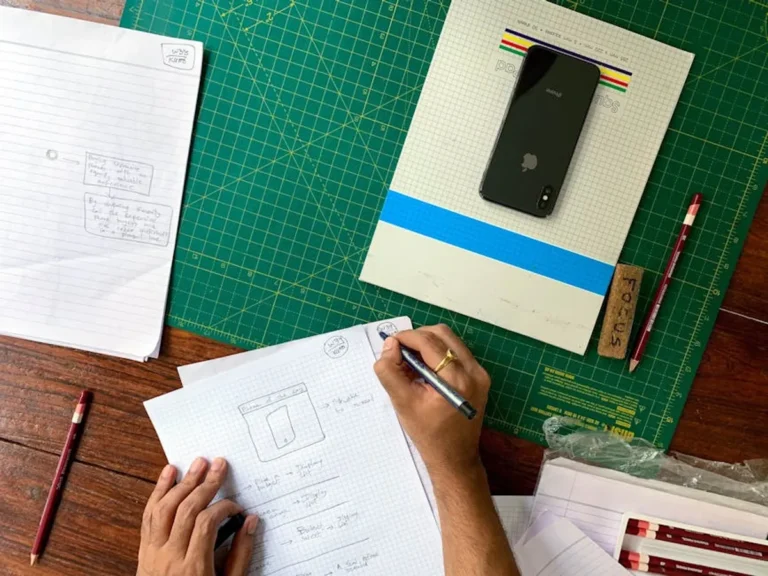
Wireframes are low-fidelity, black-and-white representations of a digital product's layout and functionality. They are the skeletal framework, stripped of all visual design elements, focusing solely on structure, content organization, and user interaction. Their primary purpose is to define what goes where and how users will navigate through the interface.
Key characteristics:
- Low fidelity: Minimal detail, often resembling a sketch.
- Grayscale: No color or imagery to distract from core structure.
- Focus on content and layout: Prioritizes element placement, hierarchy, and spacing.
- Functional emphasis: Illustrates user flow, navigation, and interactive components.
- Rapid iteration: Quick to create and modify, facilitating early feedback.
Wireframes are typically employed in the initial stages of a project, during concept development and information architecture planning. They are invaluable for mapping out user journeys, testing different layout configurations, and ensuring all necessary content and functional elements are accounted for. By removing visual distractions, stakeholders can concentrate on usability and logical flow, identifying potential issues before significant design effort is invested.
Best for: Early-stage concept validation, defining information hierarchy, user flow mapping, functional specification, and gathering feedback on layout and navigation.
Understanding Mockups: Visualizing the User Experience
Mockups are mid-to-high fidelity static representations that build upon the wireframe's structure by incorporating visual design elements. They provide a more realistic preview of the final product's appearance, including color schemes, typography, imagery, and detailed UI components. While still static, mockups bridge the gap between abstract wireframes and fully interactive prototypes.
Key characteristics:
- Mid-to-high fidelity: More detailed than wireframes, but not fully interactive.
- Visual design elements: Includes color palettes, fonts, icons, and branding.
- Realistic representation: Shows how the product will look and feel.
- Static image: Does not allow for user interaction or animation.
- Stakeholder communication: Facilitates discussions around aesthetics and brand alignment.
Mockups are crucial for communicating the visual direction of a project to stakeholders, marketing teams, and developers. They allow for critical feedback on branding, aesthetic appeal, and overall visual consistency before moving into development. This stage helps confirm that the visual design aligns with user expectations and business goals, reducing the likelihood of extensive reworks post-development.
Best for: Visual design review, branding alignment, aesthetic feedback, marketing previews, and detailed UI specification.
Wireframes vs. Mockups: Distinct Roles in Design Progression
The fundamental difference between wireframes and mockups lies in their level of fidelity and their primary objective within the design process. Wireframes prioritize structure and function; mockups prioritize visual appearance and branding. Using them sequentially ensures a robust and efficient development pipeline.
Consider the process of building a house: a wireframe is akin to the architectural blueprint, outlining the rooms, their dimensions, and how they connect—the functional layout. A mockup, then, is like a detailed rendering showing paint colors, flooring materials, furniture placement, and lighting fixtures—the aesthetic and visual presentation. You wouldn't choose paint colors before finalizing the floor plan, just as you wouldn't finalize visual design before confirming the functional structure.
Warning: Avoid the temptation to skip wireframing. Jumping straight to mockups often leads to costly revisions later, as fundamental structural or functional issues are discovered too late in the design cycle. Wireframes are a critical, cost-effective step for validating core ideas.
Integrating Wireframes and Mockups into Your Workflow
A typical design workflow effectively integrates both wireframes and mockups through an iterative process:
- Discovery & Research: Understand user needs, business goals, and technical constraints.
- Information Architecture (IA): Organize content and define site structure.
- Wireframing (Low Fidelity): Sketch out layouts, user flows, and functional elements. Focus on usability and content placement. Gather initial feedback on structure.
- Mockup Creation (Mid-to-High Fidelity): Apply visual design elements (colors, typography, imagery, branding) to the approved wireframes. Focus on aesthetics and visual appeal. Gather feedback on the look and feel.
- Prototyping (Interactive): Add interactivity to mockups to simulate user experience.
- User Testing: Validate designs with target users.
- Development Handoff: Provide detailed specifications to developers.
This sequential approach ensures that foundational issues are addressed early and cheaply with wireframes, while visual decisions are refined with mockups, leading to a more polished and user-centric final product.
Streamlining Your Design Process
Mastering wireframes and mockups is not merely about using different tools; it's about adopting a strategic mindset for product development. By systematically progressing from low-fidelity functional outlines to high-fidelity visual representations, teams can achieve several commercial advantages:
- Reduced Development Costs: Catching design flaws in wireframes or mockups is significantly cheaper than fixing them during or after development.
- Improved Communication: Provides clear, tangible artifacts for discussion among designers, developers, marketers, and stakeholders, minimizing misunderstandings.
- Faster Iteration: The simplicity of wireframes allows for rapid testing of multiple concepts, while mockups provide a clear visual benchmark for refinement.
- Enhanced User Experience: A structured approach ensures that both functionality and aesthetics are thoughtfully considered, leading to a more intuitive and engaging product.
- Better Stakeholder Alignment: Visualizing the product at different stages helps align expectations and secure early buy-in from all parties.
Embracing wireframes and mockups as distinct, yet complementary, stages in your design process transforms abstract ideas into concrete, actionable plans. This methodical approach is a direct investment in project efficiency, resource optimization, and ultimately, the success of your digital product.
Frequently Asked Questions
What's the main difference between a wireframe, mockup, and prototype?
A wireframe is a low-fidelity blueprint for structure and functionality. A mockup is a static, mid-to-high fidelity visual design. A prototype is an interactive, clickable version of a mockup that simulates user experience.
Can I skip wireframing if I have a clear vision?
While a clear vision is beneficial, skipping wireframing is generally not recommended. Wireframes help validate the underlying structure and user flow efficiently, often revealing overlooked functional issues that are expensive to fix later in the design or development stages.
What tools are commonly used for creating wireframes and mockups?
For wireframes, simple tools like pen and paper, or digital options like Balsamiq, Figma (with basic shapes), and Sketch are common. For mockups, industry-standard design software includes Figma, Sketch, Adobe XD, and Photoshop, allowing for detailed visual design.
How many iterations of wireframes or mockups are typical?
The number of iterations varies based on project complexity, team size, and feedback cycles. It's common to go through several rounds of wireframe revisions to solidify functionality, followed by a few iterations of mockups to refine visual design based on stakeholder and user feedback.